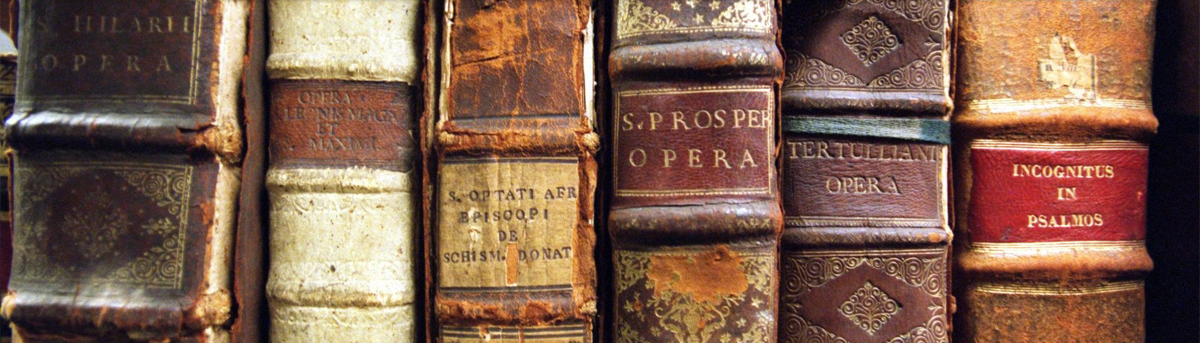
1,400 stolen rare books returned to Lambeth Palace Library in London

The Daily Mail
Books Blog

BY Taylor Malmsheimer
April 30 2013

A collection of about 1,400 rare books, including an early edition of Shakespeare’s “Henry IV, Part 2” and an illustrated account of the first expeditions to America, has been returned to Lambeth Palace in London after it was stolen almost 40 years ago.

As long ago as 1975, the palace’s librarian realized that there were gaps on the library’s shelves and estimated that around 60 volumes were missing. However, it was difficult to determine the exact number of missing books, since the collection was unorganized following a bomb hit during World War II.

“The theft was discovered in the early 1970s and the police were informed, the book trade were informed, but the police didn’t catch the thief and the trail ran cold,” director of libraries for the Church of England Declan Kelly told the Guardian.

Yet in February 2011, a sealed letter arrived at the palace’s library, leaving staff stunned. The letter, written by a former Lambeth Palace Library employee before his death, revealed the whereabouts of many of the library’s precious books.

The library staff traveled to the man’s house in London, where they found many more books than just the 60 to 90 volumes they knew were missing.

"We were staggered," Kelly told the BBC. "A couple of my colleagues climbed into the attic. It was piled high to the rafters with boxes full of books. I had a list of 60 to 90 missing books, but more and more boxes kept coming down."

The thief had taken around 1,400 books, including engraved, illustrated volumes written in the early 1600s from Theodor de Bry’s “America,” a book written in the 1500s about Martin Frobisher’s search for the Northwest Passage and a book from the late 16th century about French surgery, of which there only six or seven remaining in the world. Many of the books came from the collections of three 17th century archbishops, John Whitgift, Richard Bancroft and George Abbot, that dated back to the library’s original collection in 1610.

Robert Harding, the director of a London rare book dealer called Maggs Bros, told the BBC that scale of the theft was “extraordinary.”

"It's one of the biggest such thefts in recent decades," Harding said.

Kelly said that the thief had damaged many of the books while trying to remove proof of ownership by cutting out pages or using chemicals to eradicate ink. The BBC reports that about 10% of the books have now been repaired and 40% have been entered into the library’s online catalogue.

Kelly told the Guardian he is confused about what the thief was thinking.

"If you go to the trouble of trying to remove marks of ownership, it does suggest you are trying to sell them,” Kelly said. “But on the other hand, the fact they had all been put in the loft suggests differently. You do read about fanatics who just want to have art and own it for themselves — but it's very strange."

The BBC reports that some of the stolen books are still missing. The thief reportedly removed index cards for each book he stole, which were found at his home. However, not all of the corresponding books were recovered, leading to speculation that some may have been sold.

Harding told the BBC that if undamaged, the copy of “America” could be worth about $232,320. He also said that the Shakespeare volume might be worth $77,440.

However, Harding also said that damage affects the worth of these books.

“A book without the arms may have lost 90% of its value,” Harding said. “It’s cultural vandalism.”

Regardless of the collection’s worth, the library is thrilled to have the volumes back in their possession.

“It’s great to have this stuff back and scholars and others can now access them to see what was available to people at that time to inform themselves,” Kelly told the BBC.

The Last Bookshop

I found a reference in a Bibliophile forum that I participate in about a charming video set in the future a future where books are a thing of the past. A young boy discovers The Last Bookshop. The short film covers his discovery of books, his relationship with the shop owner and a bit of a sad ending. I think it is something you will enjoy seeing. Take a look and let me know what you think...

Iain Banks diagnosed with gall bladder cancer

Scottish author unlikely to live longer than a year and latest novel The Quarry set to be his last, he revealed on his website

Ian Banks Cancer Iain Banks diagnosed with gall bladder cancer

Alison Flood and Claire Armitstead
The Guardian, Wednesday 3 April 2013 11.57 EDT

Iain Banks, whose darkly humorous presence has enlivened Scottish literature for 30 years, has announced he is "officially very poorly" with gall bladder cancer and may have only months to live.

Banks, 59, is recovering from jaundice caused by a blocked bile duct. "But that – it turns out – is the least of my problems," he said on his website.

The author's trademark deadpan humour was to the fore as he broke the news: "I've withdrawn from all planned public engagements and I've asked my partner Adele if she will do me the honour of becoming my widow (sorry – but we find ghoulish humour helps)," he wrote.

His website soon broke under pressure from wellwishers who wanted to read the news and leave tributes.

Banks has delighted fans with his prolific output under two names, and outraged literary puritans with his blithe assertion that he aimed to devote no more than three months a year to writing, because there were so many more interesting things to do – like driving fast cars and playing with fancy technology.

So it must have seemed a very black joke indeed when he discovered a back problem he had ascribed "to the fact I'd started writing at the beginning of [January] and so was crouched over a keyboard all day" was something much more serious.

"When it hadn't gone away by mid-February, I went to my GP, who spotted that I had jaundice. Blood tests, an ultrasound scan and then a CT scan revealed the full extent of the grisly truth by the start of March," he wrote.

"I have cancer. It started in my gall bladder, has infected both lobes of my liver and probably also my pancreas and some lymph nodes, plus one tumour is massed around a group of major blood vessels in the same volume, effectively ruling out any chance of surgery to remove the tumours either in the short or long term."

He said he and his new wife intend "to spend however much quality time I have left seeing friends and relations and visiting places that have meant a lot to us".

His publishers, meanwhile, are doing all they can to bring forward the publication date of his new novel, The Quarry, "by as much as four months, to give me a better chance of being around when it hits the shelves".

Banks, who made his literary debut in 1984 with The Wasp Factory, is really two authors: he writes bestselling, mainstream, literary fiction as Iain Banks, and award-winning science fiction as Iain M Banks, about the Culture universe.

Last summer he described his development as a writer in a typically jocular column for the Guardian Review book club, which featured the first of his Culture novels, Use of Weapons. "The original draft … dates from 1974 and was packed with purple prose of the look-I've-got-a-thesaurus-and-I'm-going-to-use-it/never-use-one-adjective-when-six-will-do school. (Oh, I should add that, having written three unpublished novels by this time, one of them immensely long, and a 30,000-word novella, I must have decided that writing one book at a time was somehow too easy, so when I started writing UoW I started another novel at the same time.)"

His happy-go-lucky front conceals a stubborn streak, which he also revealed in the column, recalling how he had initially ignored the advice of two mentors – science fiction writer Ken MacLeod and publisher James Hale – as to how to liberate the novel from its "manically complicated structure that was really only comprehensible with a diagram". Having initially told both men "they were mad", he eventually realised they might have a point. "As a result, what may still be my best SF novel is largely the work of others."

MacLeod, the award-winning Scottish science fiction author, who is a friend of Banks from high school days, said the support went both ways. "It's very hard to take. Iain has been a tremendous support and encouragement over the years. You couldn't ask for a better friend, and I'm just holding out for a statistically improbable recovery."

Banks said he was still deciding whether to undergo chemotherapy "to extend the amount of time available". He told friends and colleagues about his cancer diagnosis a few weeks ago

"The way Iain has reacted to his situation is not really with a sense of unfairness but more that it's just the way the universe works, the way matter works, that there's nobody out to get us, nobody to blame for it all," said MacLeod. "It's a very courageous and stoical attitude in his situation. There's no doubting the style of the man. What you see is what you get, and the Iain who comes across in his books is very much how he is."

MacLeod said Banks thought of himself as principally a science fiction writer who happened to have published a literary novel first. "He wrote several of the Culture novels in first drafts before The Wasp Factory and he got many rejections. He was almost embarrassed when he wrote a mainstream novel in The Wasp Factory and wondered if his friends would think he was selling out."

Banks's friend Ian Rankin, creator of the archetypal Scottish detective Inspector Rebus, said he preferred the literary novels to what Banks called his "skiffy" [sci-fi] books. "The exciting thing about reading Iain Banks is that you never know what kind of book it's going to be.

"It could be weird, it could be other-worldly, it could be literary fiction, a family saga, about a disc jockey – you don't know what you're going to get, so every time a new book comes out there was that excitement."

Rankin said he and Banks were part of a group of writers who would get together "fairly regularly, either for a few beers in Edinburgh, or a curry."

"He has this huge belly laugh with his head thrown back … He's a really interesting guy to spend time with – a mind fizzing with energy and ideas, with a childlike wonder at the world. He's also quite engaged with politics – I remember him destroying his passport in protest at what he saw as Tony Blair's warmongering, and then suddenly realising he needed it for a tour to Australia. He wears his politics and his passion on his sleeve, and he's full of quirks – really engaging quirks. He was attempting at one point to drive along every single road in Scotland, for example, keeping very detailed road maps."

Rankin said Banks's comment about asking Adele if she would do him the honour of "becoming my widow" was typical of the author.

"That combination of the macabre with the comedic is something he pulled off time and again in his fiction," said Rankin. "He's taken it with good grace and humour and stoicism. I hope I have the chance to have that drink with him in Edinburgh."

Banks wrote an exploration of the history of malt whisky, Raw Spirit, which gave him an excuse to expound his political beliefs. He began his journey, shortly after Iraq had been invaded, in a car festooned with anti-war posters. Given its timing, he wrote, the book "can't help being about the war", but then whisky had always been "up to its pretty bottle neck" in politics.

These days, Banks flaunts his political views with a FTT (Fuck the Tories ) T-shirt. But a courteous side was shown in his statement that the treatment he had received from the NHS in Scotland had been "exemplary, and the standard of care deeply impressive. We're all just sorry the outcome hasn't been more cheerful."

"It's very moving indeed how many people are very sad," said MacLeod. "Everybody who knows him is just devastated by this."

Banks's statement was reposted on a new website called Banksophilia friends of Ian Banks, which has been set up for friends, family and fans to leave messages and check his progress.

Large selection of Harry Potter 1st Editions at Heritage’s NY Rare Book Event

Harry Potter Large selection of Harry Potter 1st Editions at Heritage’s NY Rare Book Event

Press Release: Heritage Auctions

Large selection of Harry Potter 1st editions Heritage’s NY Rare Book Event
Broad field of signed first editions plus large selection of Harry Potter first editions offered April 10

Apr 01,2013 - The largest single selections of signed Harry Potter first editions offered at one time, including a rare first edition, first printing of J.K. Rowling's Harry Potter and the Philosopher's Stone - one of the first 500 copy press run – may conjure $30,000+ as part of Heritage Auctions’ Rare Books Signature® Auction April 10 at New York’s Fletcher Sinclair Mansion (Ukrainian Institute of America) at 2 East 79th Street (at 5th Ave.). A highlight among the number of signed and autographed editions is a first edition of Harry Potter and the Deathly Hallows, signed by Rowling and 14 members of the cast of the Warner Bros. film. The book is accompanied by a pass to a cast and crew screening of the film and a certificate of authenticity and is expected to bring $5,000+.

The volumes leads a deep run of the world’s more sought after children’s titles among a select library of unique books, manuscripts, prints and maps.

“The is the first time collectors can take their pick among nearly two dozen signed or rare Harry Potter editions or J.K. Rowling autographs in one auction,” said Joe Fay, Manager of Rare Book Auctions for Heritage.

The strong selection of children’s titles continues with a rare presentation copy of Beatrix Potter’s The Tailor of Gloucester, inscribed and accompanied by an autographed letter and a small slip of paper sporting four distinct signatures, expected to fetch $12,000+. A 1918 signed letter by L. Frank Baum, the author of the beloved Wizard of Oz on his personalized stationery illustrated by images of covers of 14 "Oz" books, is expected to bring $10,000+ and is one of three Baum lots, including a first edition of Father Goose. His Book, inscribed by illustrator W.W. Denslow, expected to fetch $1,000+.

On the other end of the fiction spectrum, the auction features a 1955 first edition of Ian Fleming’s James Bond classic Moonraker – one of 10 signed Fleming titles available – which is expected to bring $30,000+. A first edition of Cormac McCarthy’s Blood Meridian or the Evening Redness in the West, inscribed and signed by McCarthy to his close friend, Bill Kidwell, is expected to bring $2,500 and a scarce, asbestos bound copy of Ray Bradbury’s Fahrenheit 451, a presentation copy warmly inscribed to novelist and screenwriter Richard Matheson and his wife is expected to bring $10,000+.

Several lots of important photographic volumes is led by Julia Peterkin’s Depression era Roll, Jordan, Roll, one of the first books to depict African-Americans as real people and not stereotypes. Illustrated with 90 photogravure prints and with the rare signed print, the volume is set to bring $10,000+. A full 21 volumes of The Philadelphia Photographer, a rare early American photography magazine, with 222 mounted albumen prints, is expected to bring $5,000+.

Two, early and faith-changing translations of The Bible, a 1550 copy of the historic Coverdale Bible, the first complete modern English translation of the Bible, and William Tyndale’s 1566 translation of The New Testament, are expected to bring $25,000+.

Collectors of important works on science will find particular interest in Johannes Kepler’s 1611 first edition describing why snowflakes are hexagonal (200 years before the solution was finally discovered), which is expected to realize $25,000+, a first edition of Charles Darwin’s groundbreaking On the Origin of Species, is expected to bring $20,000+, while Dmitri Ivanovich Mendeleev’s Principles of Chemistry, dated 1869-71, is expected to bring $20,000+. The selections continue with Julius Casserius' 1600 work on the vocal and auditory organs, with 34 striking anatomical copper plate illustrations, is expected to bring $15,000, while Christiaan Huygens’ volume from 1690 explaining his groundbreaking wave theory of light, which may fetch $15,000+.

Further highlights include but are not limited to:

Robert E. Howard’s original typed manuscript for the Conan the Barbarian story, "A Witch Shall Be Born," originally published in Weird Tales, December 1934, is expected to fetch $25,000+.

A rare second printing of the first appearance of the U.S. Articles of Confederation is expected to fetch $15,000+.

James Malton’s 1811 volume titled A Picturesque and Descriptive View of the City of Dublin and illustrated by 25 hand-colored plates is expected to bring $10,000+.

A 1755 copy of the first edition of A Dictionary of the English Language by Samuel Johnson, "the most amazing, enduring and endearing one-man feat in the field of lexicography," is expected to bring $12,500+.

Heritage Auctions is the largest auction house founded in the United States and the world’s third largest, with annual sales of more than $800 million, and 750,000+ online bidder members. For more information about Heritage Auctions, and to join and receive access to a complete record of prices realized, with full-color, enlargeable photos of each lot, please visit HA.com

World Book Day - March 7, 2013

World Book day World Book Day   March 7, 2013

World Book Day was designated by UNESCO as a worldwide celebration of books and reading, and is marked in over 100 countries around the globe.

UNESCO says< "Starting from 1996 UNESCO has been celebrating World Book and Copyright Day, whose aim it is to promote reading, publishing and the protection of intellectual property through copyright.

The origins of the day we now celebrate in the UK and Ireland come from Catalonia, where roses and books were given as gifts to loved ones on St George's Day – a tradition started over 90 years ago.

World Book Day is a partnership of publishers, booksellers and interested parties who work together to promote books and reading for the personal enrichment and enjoyment of all.

A main aim of World Book Day in the UK and Ireland is to encourage children to explore the pleasures of books and reading by providing them with the opportunity to have a book of their own.

First-Edition, Signed 'Gatsby' Was Stolen From Him, Man Says

 First Edition, Signed Gatsby Was Stolen From Him, Man Says

Source: Courthouse News Service
by: By REBEKAH KEARN

SANTA ANA, Calif. (CN) - A book dealer is asking $750,000 for a signed first edition of "The Great Gatsby," which was stolen from a man's home, and whose character Tom Buchanan was "loosely modeled" on the man's father, the son claims in court.

William M. Hitchcock sued James Robert Cahill Rare Books, and Quintessential Rare LLC dba AbeBooks.com dba James Cahill Publishing/Rare Books, in Federal Court.

Hitchcock, of Houston, claims the book is a family heirloom and that Cahill has no right to sell it.

Hitchcock seeks "to recover a unique and valuable boo, to wit, a first edition of F. Scott Fitzgerald's classic and critically acclaimed novel 'The Great Gatsby' autographed by the author and inscribed to Hitchcock's father, Thomas Hitchcock: 'For Tommy Hitchcock for keeps from his friend F. Scott Fitzgerald Los Angeles 1927."

Hitchcock says his father, who died fighting in World War II, "was the dominant American polo player of his generation. Fitzgerald loosely modeled the character of 'Tom Buchanan' in the novel 'The Great Gatsby' and the character of 'Tommy Barban' in ... 'Tender is the Night' on Thomas Hitchcock. Fitzgerald also autographed and inscribed a copy of 'Tender is the Night' to Thomas Hitchcock."

After Hitchcock's father died, the autographed copy of "Gatsby" passed to Hitchcock's mother, then to him when she died in 1997, the complaint states.

Hitchcock says he displayed the book in his house until 2005 or 2006, when "a person or persons unknown removed the book from Hitchcock's residence without his permission, authorization or knowledge."

He claims he realized the book was missing after he moved to a new house. Hitchcock says he looked for the book and talked to his friends about its disappearance, but never found it and "did not determine for certain that it was gone."

But in April 2012, Hitchcock says, a friend saw the book for sale on Cahill's website for $750,000.

Upon investigation, Hitchcock says, he found that Cahill had bought the book "at a Bonham's auction in Los Angeles in or about 2010 for about $61,000."

Hitchcock claims Cahill never bothered to find out who owned the book before he bought it. He claims Cahill did not receive "any documentation of the provenance or history of possession of the book or proof that it had left the possession of the Hitchcock family lawfully or with the Hitchcock family's consent."

Hitchcock says he filed an online crime report with the Houston Police Department on April 17. Then he had attorney Thomas Kline, with Andrews Kurth, send Cahill a letter demanding return of the book, to no avail.

When Cahill refused to cooperate, Hitchcock says, he "filled out a stolen art data sheet" with the FBI on April 26. He says the FBI investigated for almost a year, but closed its case in February this year without pressing charges.

Hitchcock then hired another lawyer and tried again to retrieve the book. He claims that on Feb. 28, attorney Terry Higham "contacted James Robert Cahill by email and telephone and renewed Hitchcock's demand for return of the book. Following the conversations occurring on March 1, 2013, Mr. Cahill again refused to return the book," the complaint states.

It continues: "During his telephone conversation with Higham, James Robert Cahill claimed that he had already transferred the book to a resident of the United Kingdom who intended to deface the book by cutting out the pages containing Fitzgerald's signature and inscription. Upon Higham's objection to the defacing of the book, Mr. Cahill indicated that he could prevent such defacement of the book, if he chose to do so."

Hitchcock says he is the rightful owner of the book, and he wants it back.
"Because the book, as inscribed to Hitchcock's father, is a unique work of literature of historical and personal significance, the harm to Hitchcock cannot be adequately remedied unless the book is returned to him, with damages for loss of use and enjoyment during the period of Cahill's detention of the book," the complaint states.

Hitchcock says he is afraid that Cahill or his alleged customer "will make good on Mr. Cahill's threat to deface the book by cutting out the pages containing F. Scott Fitzgerald's signature and the author's inscription to Hitchcock's father."

Hitchcock seeks a preliminary injunction preventing Cahill from selling or defacing the book, declaratory judgment that Hitchcock is the book's only rightful owner, wants Cahill ordered to return the book, and damages for replevin and conversion.

He is represented by Terry L. Higham with Barton, Klugman & Oetting of Los Angeles.

Book Collecting Conference This Month In Utah

Source: American Exchange.com
- By Michael Stillman

The tenth annual A. Dean Larsen Book Collecting Conference will be held at Brigham Young University in Provo Utah on Friday, March 22, 2013, with a group of pre-conference workshops the previous day. Anyone with an interest in collectible books, either from a collector's or trade participant's perspective, within traveling distance of Provo/Salt Lake City should make their way to BYU. These conferences are amazingly inexpensive for an education. It's just $35 for a day of learning, and an additional $35 for one of the pre-conference workshops.

Here is how it works. You can either print out and mail in the online registration form, or call them and a real person will complete your form and accept your credit card. It's that simple. You get to go to college without sending in any transcripts, providing recommendations, or taking the SAT, for $35 of tuition. Anyone funding someone's college education will be astonished by a deal like that. If for some reason you can't attend, you can transfer your registration to an associate.

Award winning illustrator Bethanne Andersen will host a seminar on British illustrators. Other offerings include a seminar on understanding and collecting folklore, one on fine printing in North America, collecting accounts of travelers to Yellowstone and other national parks, and a visit to the Civil War exhibition. There are also three seminars in the highly collectible field of Mormon texts, including Mormon hymnbooks 1832-1872, Mormon incunabula (1830-1839), and a history of printed editions of the Book of Mormon, starting with the typeset from the original manuscripts.

Three workshops are offered on the day preceding the conference (Thursday, March 21). There is a hands-on instruction workshop on cloth spine repair, one of the most common issues with older books. Participants should bring a book with a torn or loose spine as you will learn how and then complete a repair. A second workshop will cover “book repair on a budget,” where you will learn how to make basic repairs and know when it is necessary to seek professional assistance. A third workshop will will take you through the procedures used in creating albumen photographs, including actually producing one yourself using this 19th century process (it involves breaking a lot of eggs). The first two workshops are a half-day in length, the albumen photograph workshop taking a full day.

Those who go will be able to attend four of the eight seminars. Registrants can then add on the pre-conference workshops if they wish. Enrollment is limited to 125 participants so don't delay. You can find out information on how to register and more details about the conference and the available courses at the following website: adlbookcollectingconference2013

Anthropodermic Bibliopegy or Books Bound in Human Skin

This topic has interested me for quite some time. I find the practice strangely intriguing and gruesome at the same time. In fact this practice dates back to the 17 th century and there are a number of these strange in public (and probably private) collections as noted below. Wikipedia has a fairly comprehensive article on the practice of binding books in human skin - also known as Anthropodermic Bibliopegy.

Please tell us if you have any experience or expertise in these books...

From Wikipedia, the free encyclopedia

Anthropodermic bibliopegy is the practice of binding books in human skin. Though extremely uncommon in modern times, the technique dates back to at least the 17th century. The practice is inextricably connected with the practice of tanning human skin, often done in certain circumstances after a corpse has been dissected.

Surviving historical examples of this technique include anatomy texts bound with the skin of dissected cadavers, volumes created as a bequest and bound with the skin of the testator (known as "autoanthropodermic bibliopegy"), and copies of judicial proceedings bound in the skin of the murderer convicted in those proceedings, such as in the case of John Horwood in 1821 and the Red Barn Murder in 1828.

The libraries of many Ivy League universities include one or more samples of anthropodermic bibliopegy.  The rare book collection at the Harvard Law School Library holds a book allegedly bound in human skin, Practicarum quaestionum circa leges regias Hispaniae, a treatise on Spanish law, though testing on the binding has proven inconclusive. A faint inscription on the last page of the book states:

"The bynding of this booke is all that remains of my deare friende Jonas Wright, who was flayed alive by the Wavuma[1] on the Fourth Day of August, 1632. King Btesa did give me the book, it being one of poore Jonas chiefe possessions, together with ample of his skin to bynd it. Requiescat in pace."

The John Hay Library's special books collection at Brown University contains three human-skin books, including a rare copy of De Humani Corporis Fabrica by Vesalius.

Some early copies of Dale Carnegie's Lincoln the Unknown were covered with jackets containing a patch of skin from an African American man, onto which the title had been embossed. A portion of the binding in the copy that is part of the collection of Temple University's Charles L. Blockson Collection was "taken from the skin of a Negro at a Baltimore Hospital and tanned by the Jewell Belting Company".

The National Library of Australia holds a book of 18th century poetry with the inscription "Bound in human skin" on the first page.

Another such book resides at the University of Georgia in the Richard B. Russell Special Collections Library.

Several anatomical volumes, including at least one belonging to and apparently prepared by the renowned anatomist Joseph Leidy (September 9, 1823 – April 30, 1891) are in the Mütter Museum of the College of Physicians of Philadelphia. As of August 2012, these volumes and samples of human-skin leather were on public display.

There is also a tradition of certain volumes of erotica being bound in human skin. Examples reported include a copy of the Marquis de Sade's Justine et Juliette bound in tanned skin from female breasts. Other examples are known, with the feature of the intact human nipple on one or more of the boards of the book. One volume from very early in the 17th century is said to show the face of a priest who was put to death for his alledged part in the attempted assassination of a King.

book bound in human skin Anthropodermic Bibliopegy or Books Bound in Human Skin

The real book bound in human skin and a fake.

This Just In: The Maurice Levy Collection of French Gothic

resized IMG 0179 This Just In: The Maurice Levy Collection of French Gothic

Here is a brief post about an article I found on The University of Virginia Library Site. I found it very interesting as I understand many of us wonder (worry) about what will become of our collections after we have "passed on". Professor Maurice Levy found an excellent way to make sure his collection was taken care after his demise. The article starts with: This week Nicole Bouché, Director of Albert and Shirley Small Special Collections Library, relates the story of how a major new acquisition came to University of Virginia. You can read this interesting story HERE.

Upcoming Auctions of Easton & Franklin Books from the Library of Mark W. Lobst

H4128 C41028429 Upcoming Auctions of Easton & Franklin Books from the Library of Mark W. Lobst

Hi. I just found out about this today. The first auction is tomorrow but the collection is "huge" so multiple auctions are upcoming. Online bidding is accepted and you can find auction details at ArtFact. The auctioneer is Levine Auction & Appraisal LLC from Scottsdale. Arizona. The auction is all "No Reserve". Opening bid on most lots is $10.00. Books are listed as in "excellent" condition.

I hope this will be helpful to yaw'll. Enjoy!